The Carnatic Continuum

Can the rigor of an oral classical tradition be translated into sensory systems: touch, sight, interaction, without losing its soul?

6 months across 2 years
Process

The inquiry was stratified across three distinct levels of interaction:

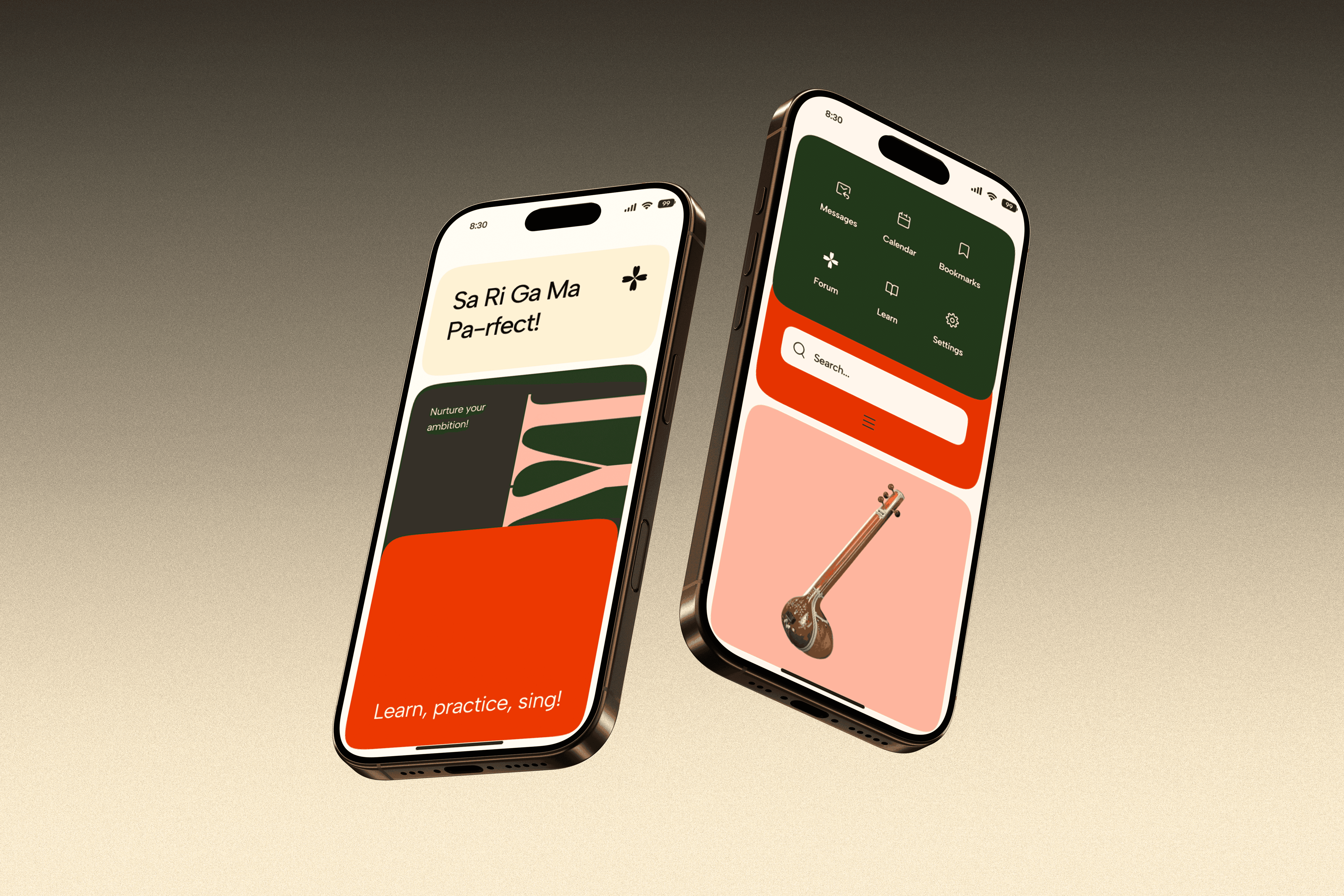
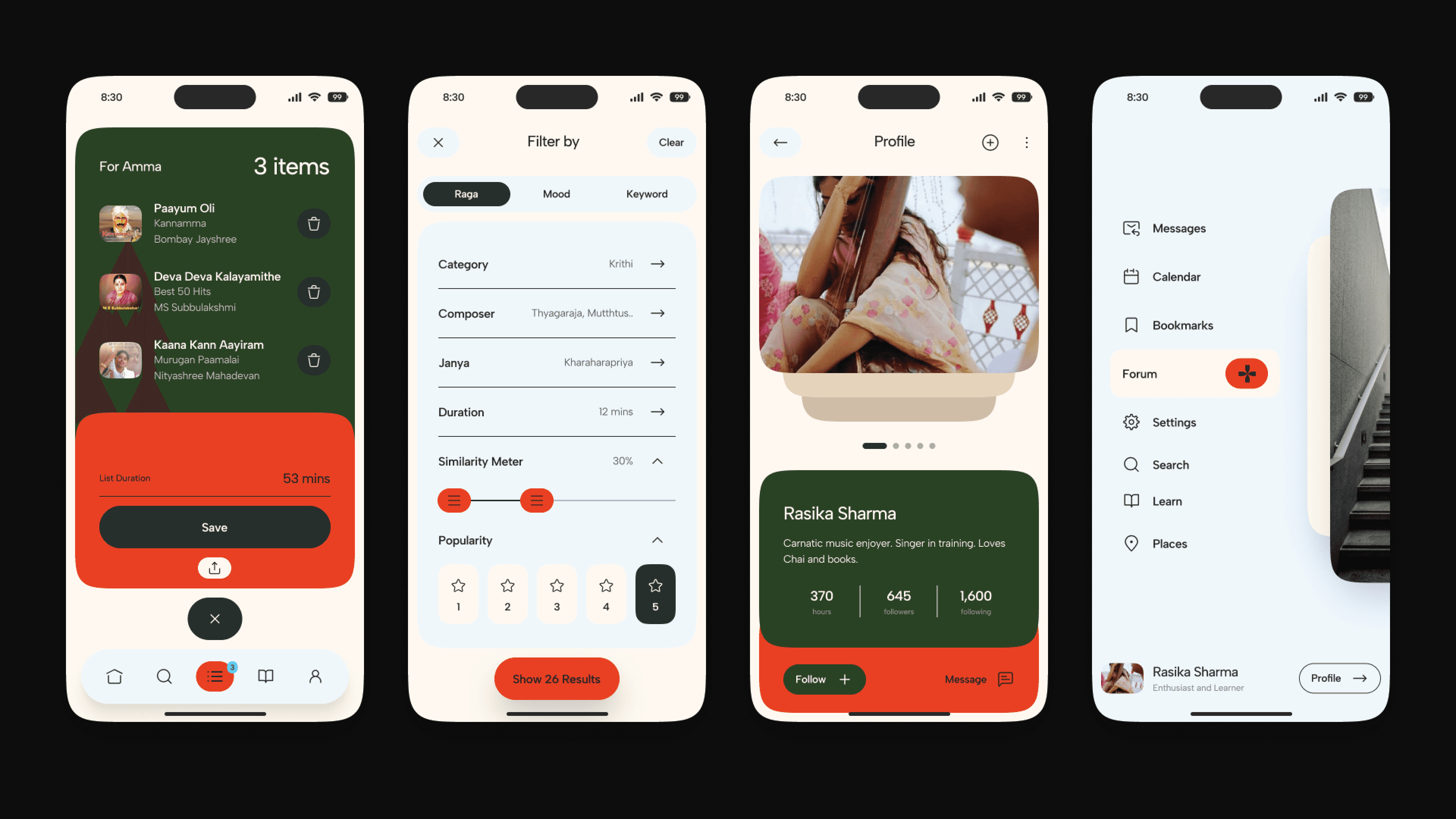
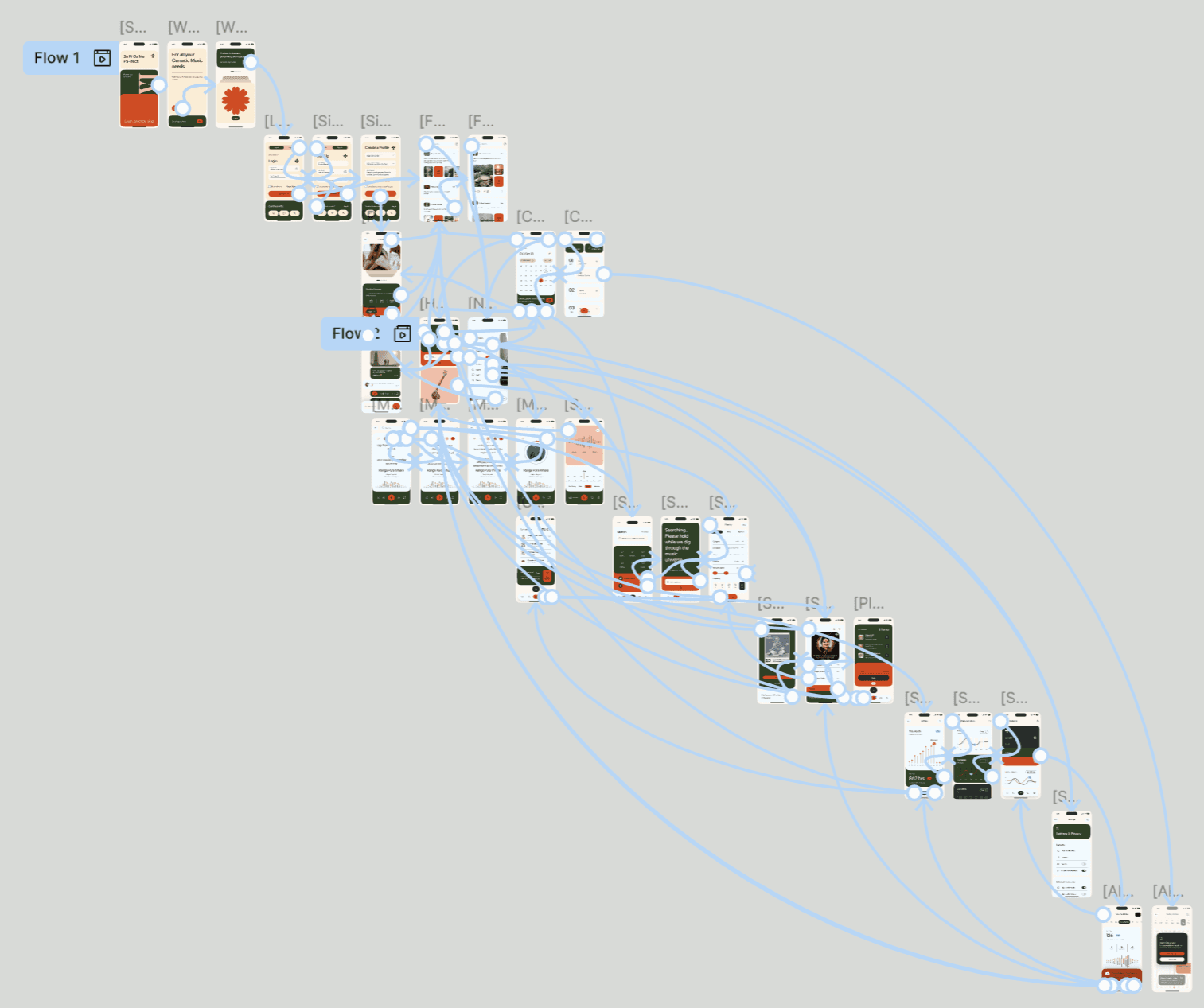
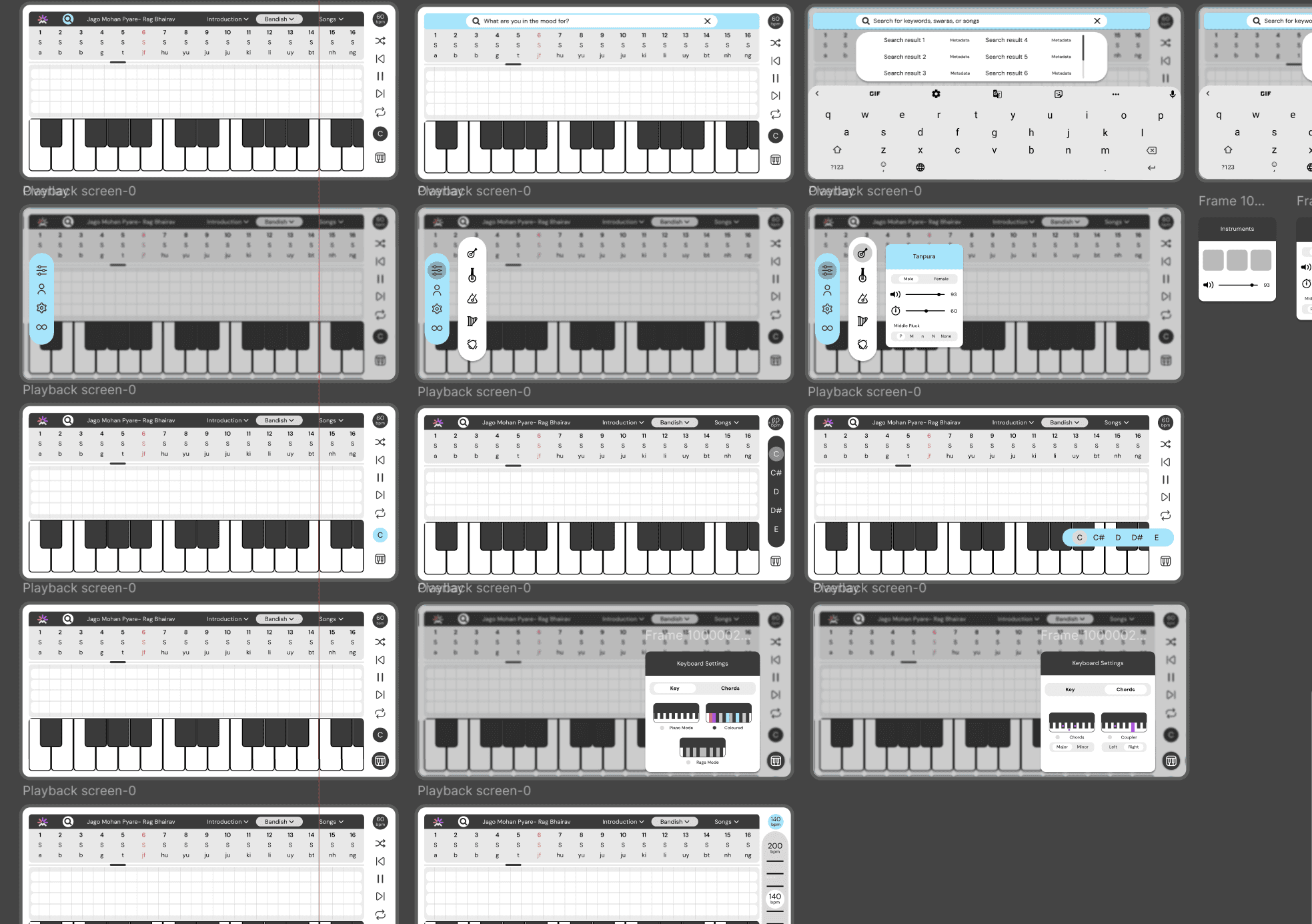
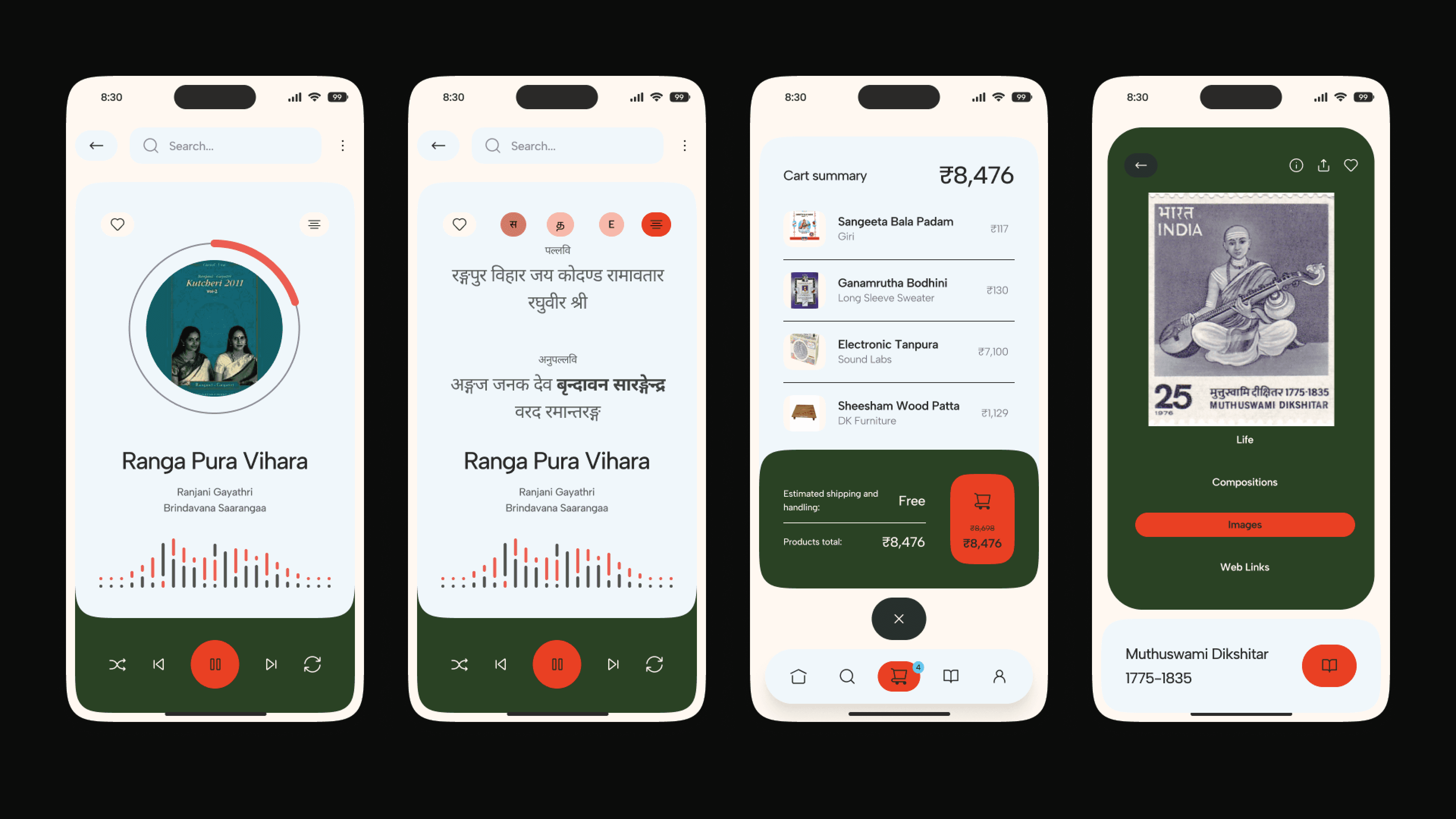
  1. Systemic Mapping (Sthayi): I began by auditing the "mental architecture" of the practitioner. This involved designing an information architecture that translates the emotional taxonomy of music into a navigable UI, specifically through a raga-filtering system based on mood and keyword.

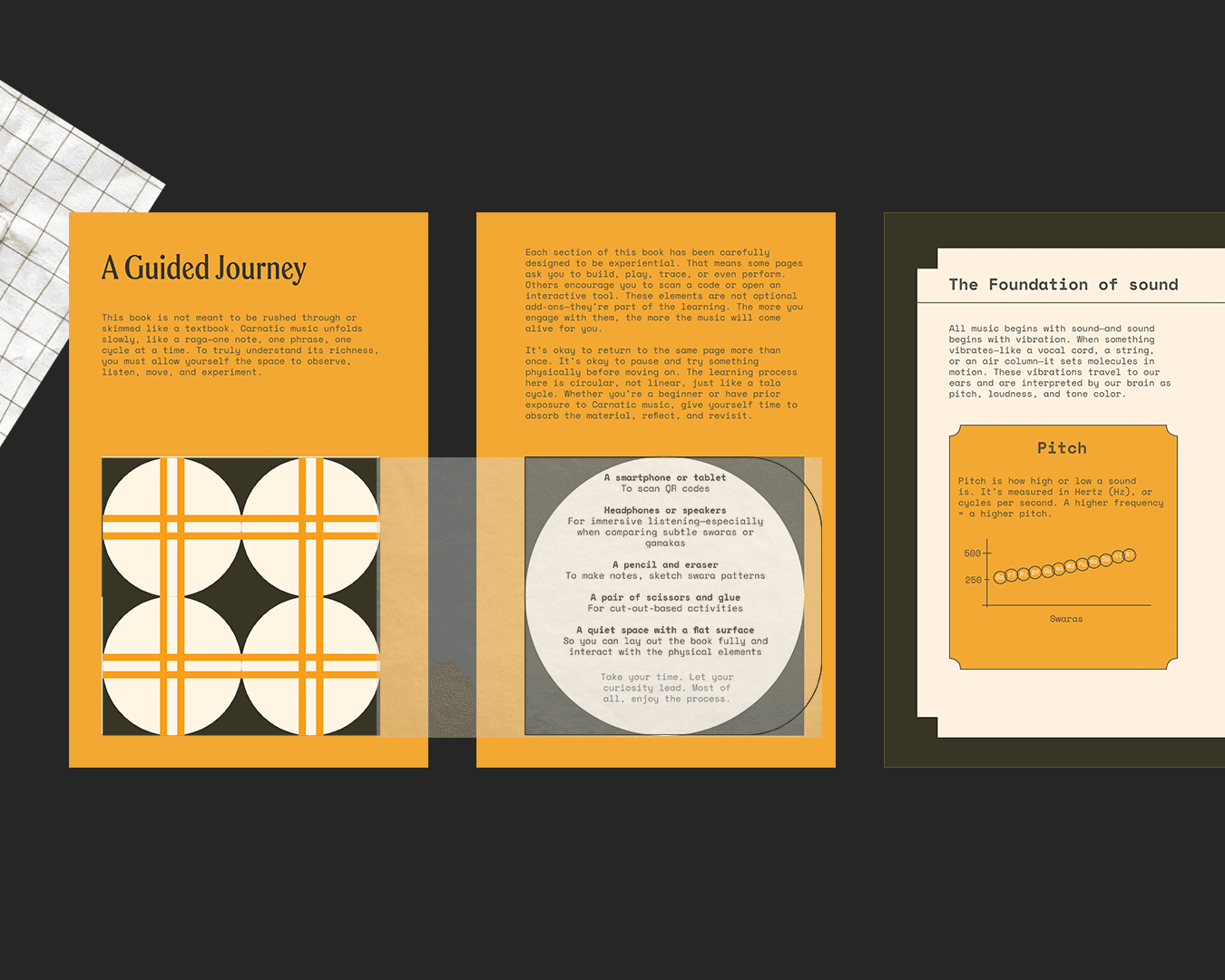
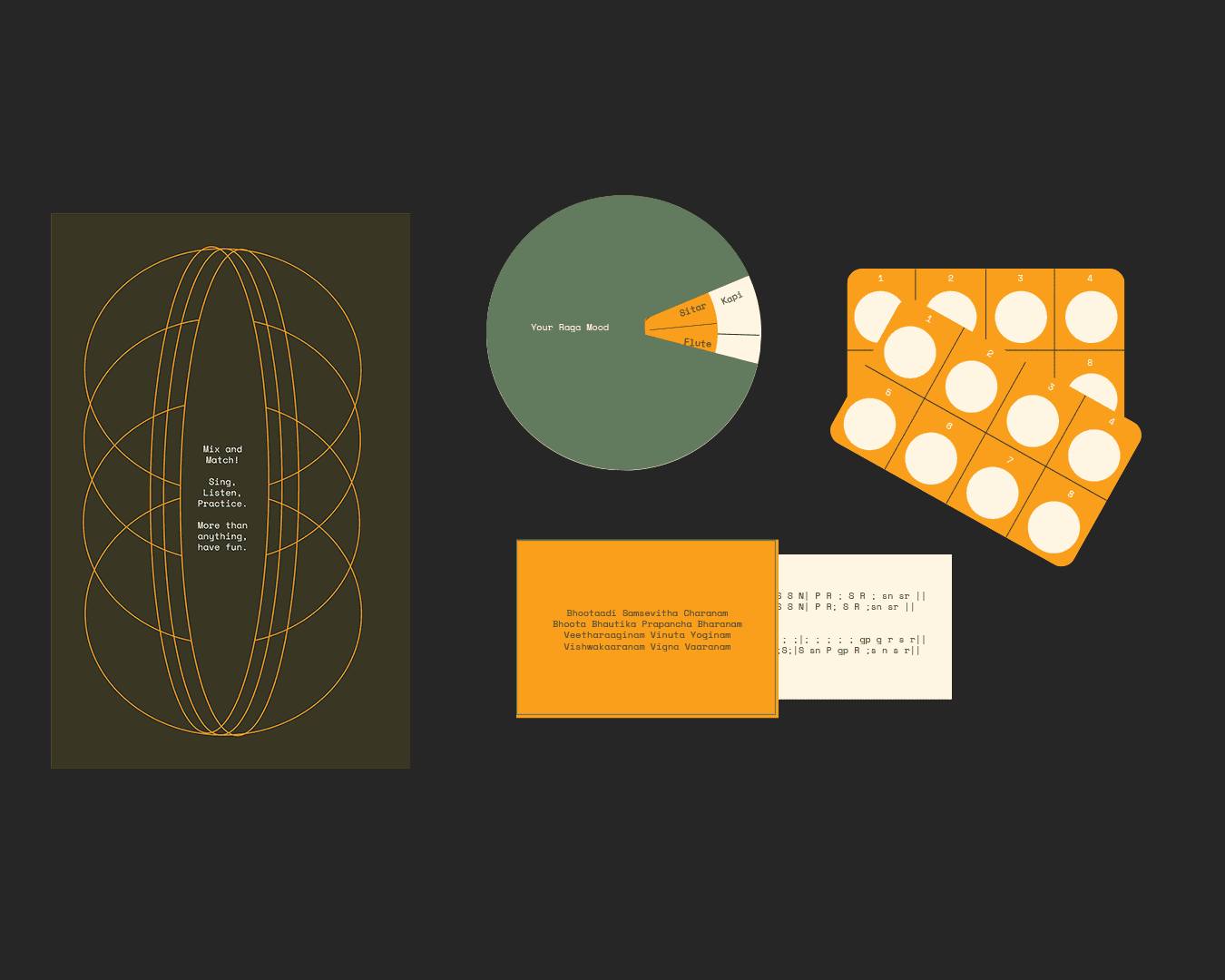
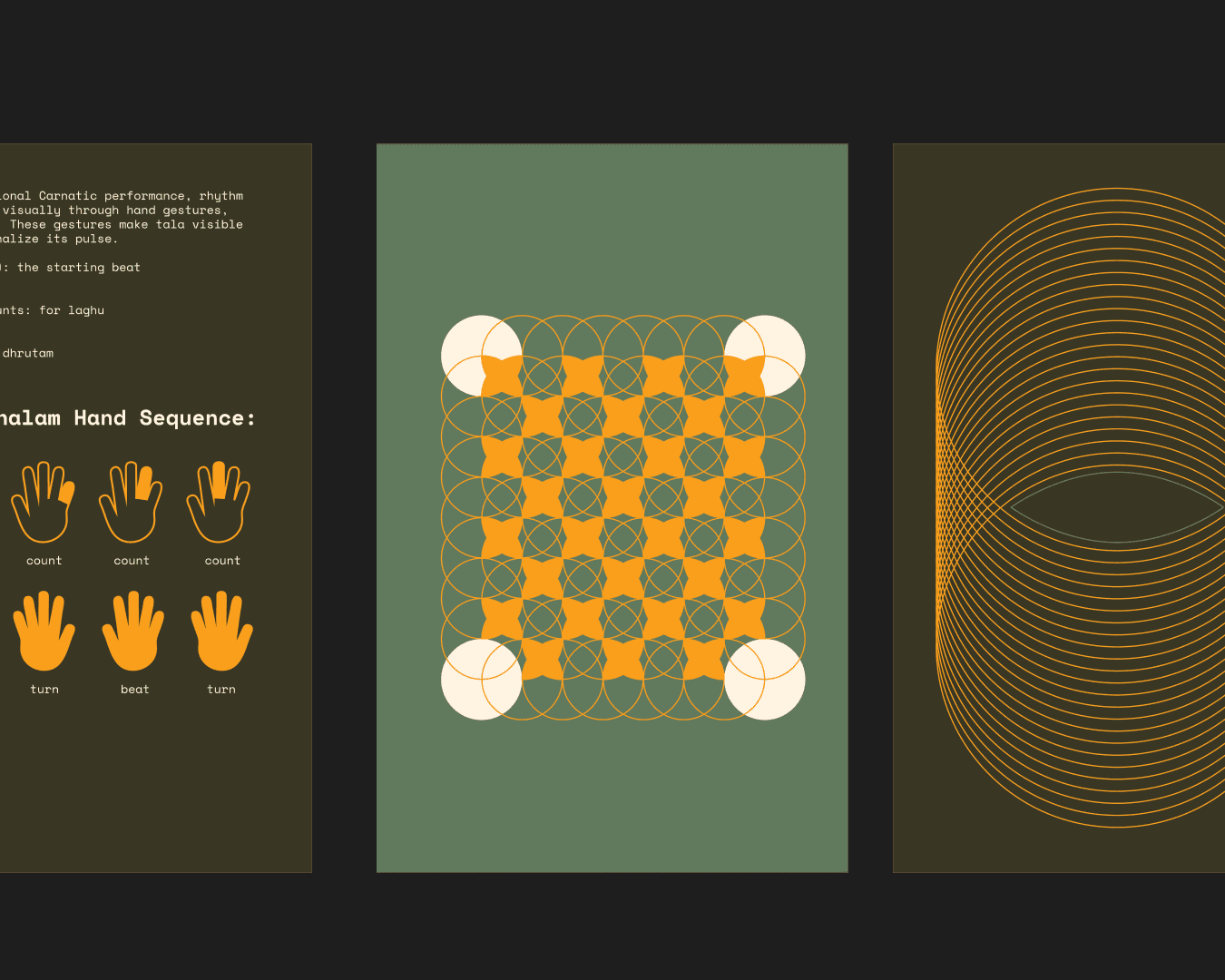
  2. Tactile Ritual (Carnhaptic): I moved the inquiry into the material realm, treating publication design as a multisensory ritual. I experimented with production methods, paper grain and tactile layers, to simulate the floating and ephemeral nature of musical notation.


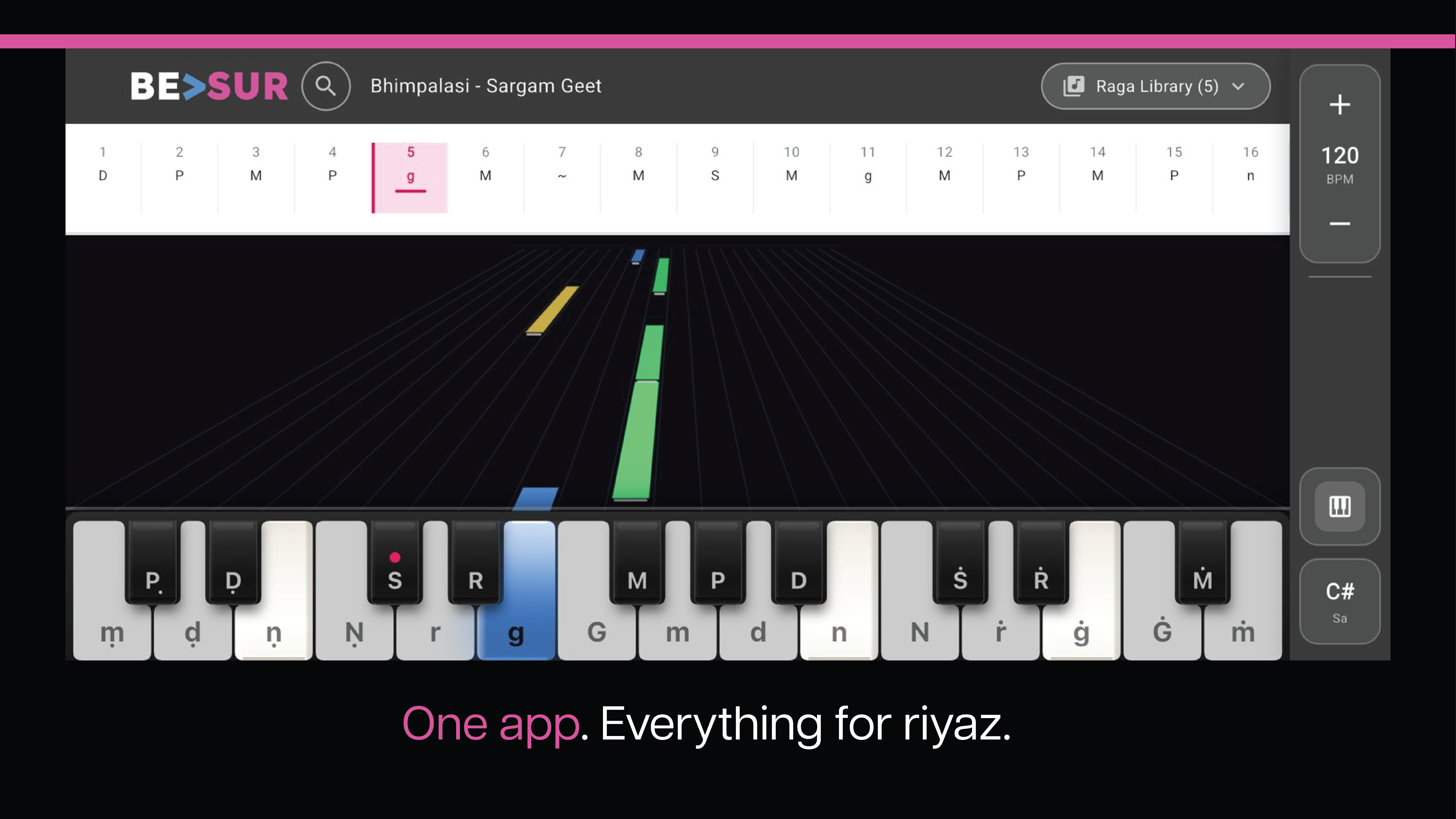
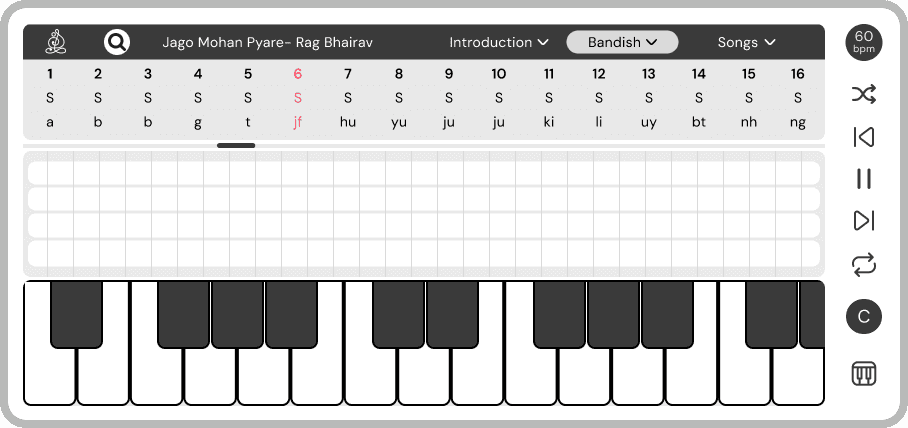
  3. Technical Negotiation (Be>Sur): During my internship at Marva, the process shifted to professional collaboration. I worked within a larger chain of command comprising of engineers and developers, to ensure that the AI-guided feedback loops remained musically accurate while adhering to the technical performance constraints of a live app launch.
A graduated ecosystem of artifacts

With Sthayi, the interface allows for a discovery process based on emotional resonance (Bhava) rather than just nomenclature. It creates a search system that mirrors how music is felt before it is studied.


By experimenting with varied paper weights, grains, and tactile overlays, the design simulates the ritualistic, repetitive nature of oral learning. It functions as a material critique of the static textbook, offering a multisensory engagement where the visual layout responds to the rhythm of the raga.


Working alongside engineers and developers, I ensured that the complex AI-guided feedback loops remained musically accurate and intuitive, resulting in a functional interface that maintains the dignity of the tradition within a high-performance digital environment.


Outcome
Reflection

Borrowing from the idea of "precision-through-restraint," I realized that designing for classical arts is an exercise in architectural humility. The objective was not to "disrupt" the oral tradition, but to build a digital Kalam (arena) as a space that acknowledges its own limits as a container while providing a dignified, responsive home for the music it houses.

Try out the Be>Sur app for your apple devices here